
National Hunt Racing Guide — Betting the Irish Jumps Season
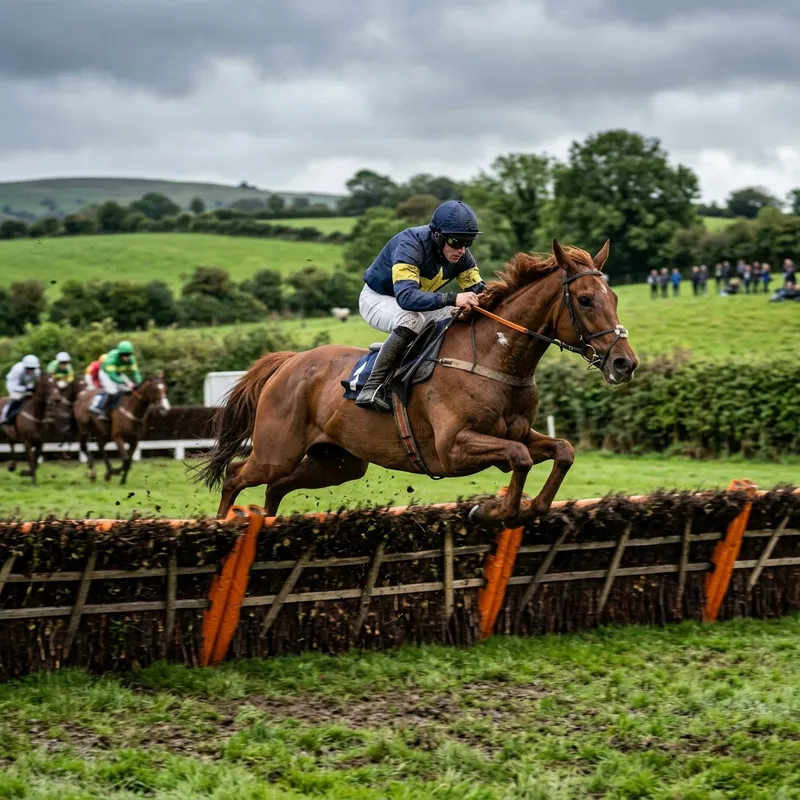
If the flat is summer's pastime, National Hunt racing is the Irish winter's obsession. Jumps racing — over hurdles and fences, on the soft, testing ground of the colder months — is the code Ireland does better than anywhere on earth, and its festival calendar is the spine of the domestic betting year. From Leopardstown between the turkey and the new year to the roar of Punchestown in spring, this is a guide to the season, its great festivals, and how to bet the jumps with a bit of local knowledge on your side.
What National Hunt Racing Actually Is
National Hunt is jumps racing, and it comes in three forms worth knowing. Hurdles are the faster discipline, run over smaller, more forgiving obstacles, and are often where a young horse learns its trade. Steeplechases are the sterner test — bigger, stiffer fences that demand jumping, stamina and courage, and which produce the sport's most famous races. Bumpers, or National Hunt flat races, are run without obstacles and exist to give future jumpers raceday experience. The season runs mainly from autumn through to late spring, on the soft, holding ground that jumps horses need, which is exactly why Ireland's mild, wet winter makes it the spiritual home of the code.
The Shape of the Jumps Season
The season builds in deliberate stages, and understanding the arc helps you read the form. The autumn is the warm-up, when horses reappear and the ante-post markets for the spring festivals begin to take shape. Christmas brings the first true peak. February sharpens everything, March at Cheltenham is the championship crescendo, and the season signs off in late April with Punchestown, where Cheltenham form is confirmed or overturned on home soil. Each festival feeds the next: a horse that wins impressively at Leopardstown at Christmas becomes a Cheltenham ante-post player, and the smart punter follows that thread through the winter rather than treating each meeting in isolation.
Leopardstown and the Dublin Racing Festival
Two Dublin fixtures anchor the mid-season. The Leopardstown Christmas Festival, run across four days from St Stephen's Day, is the first great gathering of the campaign, headlined by the Savills Chase and the Christmas Hurdle, and it is where the season's leading lights first meet. Then, in early February, the same track hosts the Dublin Racing Festival — two days of concentrated Grade One quality that has become one of the most important meetings in the entire jumps calendar, a genuine Cheltenham trial where reputations are made and ante-post prices tumble. For a punter, these Leopardstown fixtures are the clearest form guide to the spring festivals you will get, so watch them closely even if you are saving your stakes for March.
Fairyhouse and the Irish Grand National
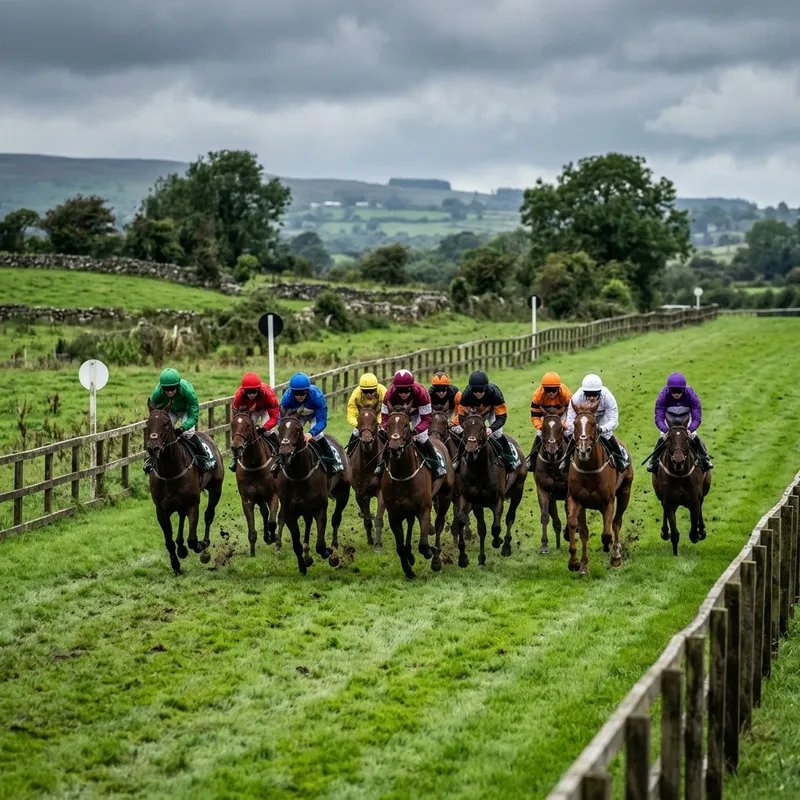
Easter belongs to Fairyhouse and the Irish Grand National, one of the most cherished prizes in the Irish sporting year. A marathon handicap chase over an extreme trip, it is a huge-field, wide-open puzzle that draws some of the biggest each-way betting of the season — exactly the kind of race where place terms matter as much as the price. With so many runners carrying weight over a gruelling distance, proven stamina, a handy handicap mark and the ability to jump economically for miles are the qualities to hunt for, and the value is almost always each-way at a bigger price rather than short on the favourite. It is a race won by staying, jumping and luck in running as much as by class.
Punchestown — the Season Finale
The Punchestown Festival in late April is where the jumps season signs off in style, five days of Grade One racing on home ground that serve as the great reckoning for the Cheltenham form. Horses that ran well in England return to confirm their standing; those that underperformed get a chance at redemption; and the trainers' and jockeys' championships are often settled in the closing days. For a punter, Punchestown offers a fascinating angle: how does Cheltenham form translate back to Irish soft ground, and which horses are fresh versus which have had a hard campaign? Read the Cheltenham running-lines carefully and you can find horses either flattered or unlucky in March, and Punchestown is where that knowledge pays.
The Trainers and the Course Specialists
Modern Irish jumps racing is dominated by a handful of powerful yards, and respecting that concentration of talent is basic self-defence for a punter. The operations of Willie Mullins and Gordon Elliott, alongside the likes of Henry de Bromhead, win a remarkable share of the big prizes, and when one of them saddles several runners in a race it pays to note which the stable jockey chooses. Course-and-distance form is gold in jumps racing too: a horse that has already handled the specific fences and undulations of a track — Fairyhouse's stamina test, Punchestown's stiff finish — is worth more than its bare figures suggest. Lean on proven course winners and the form horses of the dominant yards over fashionable names without a record.
How to Bet the Jumps
The staple of jumps betting is the each-way play in the big-field handicaps, and place terms decide it. In a twenty-plus-runner handicap the Irish books compete hard on extra places — paying five, six or more — so the single most valuable habit is comparing place terms across your accounts before the off. Take best-odds-guaranteed in the morning so a drifter still pays at the bigger price, respect stamina and soft-ground form above raw speed figures, and do not be afraid of a value outsider each-way in the marathon handicaps, which are routinely won by horses few fancied. In the Grade One championship races, by contrast, class usually tells, and the each-way angle narrows to the win.
For the wider picture, our Irish horse racing betting guide covers markets and each-way value in depth, and our festival guides to Cheltenham and the Galway Races complete the calendar.
Reading the Going and the Ground
Ground is everything in jumps racing, and reading the going is the single most useful skill a National Hunt punter can develop. Officials describe the surface on a scale from firm through good, soft and heavy, and where a race sits on that scale reshapes the form completely. A horse with proven form on soft, holding ground can be transformed when the rain comes, while a nimble sort that skips over good ground may find heavy conditions a slog. Because the Irish winter serves up plenty of soft and heavy going, stamina and a relentless galloping style are prized here in a way they are not on quicker surfaces. Always check the going before you bet, read a horse's record on that specific ground rather than its bare form figures, and be ready to reassess a whole race when the forecast turns — a downpour on the morning of a festival can overturn the market entirely. Ground descriptions can also shift across a card as the day wears on and the surface is churned up, so a horse racing in the last may meet different conditions to one that ran in the first — another reason to follow the official going updates through the afternoon rather than relying on the morning forecast alone.
Novices, Handicaps and Graded Races
The jumps programme is organised into race types that tell you where the value and the danger lie. Novice events are for horses in their first season over obstacles, where inexperience makes them unpredictable but a well-bred, improving type can be ahead of the handicapper. Handicaps, where horses carry weight according to ability, are the big-field puzzles that produce the season's biggest each-way betting and reward digging for an unexposed improver on a workable mark. Graded and Grade One races are the championship class, where the best horses meet on level or near-level terms and raw quality usually tells, narrowing the each-way angle to the win. Knowing which kind of race you are betting shapes everything: hunt for the improver in a novice or handicap, respect the proven class horse in a Graded event, and never treat them the same way.
National Hunt racing is a long, rewarding season — pace your betting across it rather than chasing every race. Set a budget for the big festivals and stick to it. Every bookmaker featured here is Irish-licensed and offers deposit limits and self-exclusion. 18+. If gambling stops being fun, GamblingCare.ie offers free, confidential support on 1800 936 725.
Frequently Asked Questions — National Hunt Racing
What is National Hunt racing?
National Hunt racing is jumps racing — horses race over obstacles, either hurdles (smaller, faster) or steeplechase fences (bigger, more testing), plus bumpers (National Hunt flat races). It runs mainly through the winter and spring on softer ground, and it is the code Irish racing is most famous for, culminating at Cheltenham and Punchestown.
What are the biggest Irish National Hunt festivals?
The Leopardstown Christmas Festival, the Dublin Racing Festival in February, the Fairyhouse Easter festival with the Irish Grand National, and the Punchestown Festival in late April are the domestic highlights. Cheltenham in March, though in England, is the season's championship peak and the focus of enormous Irish betting.
How should I bet National Hunt races?
Each-way is the staple in the big-field handicaps, where books compete on extra places — so compare place terms before betting. In the championship races, form over the course and distance, proven stamina on soft ground, and the strength of the leading yards (Mullins, Elliott, de Bromhead) are the key angles. Always take best-odds-guaranteed on the day.
See our complete horse racing betting guide for Ireland — including exotic bets explained, venue guides, and our top rated licensed bookmakers.
See our top-rated Irish racing bookmakers →18+ only. Please gamble responsibly.
Free help available: gamblingcare.ie | Helpline: 1800 936 725
Related Posts