
Irish Horse Racing Betting Guide — Festivals, Markets & Each-Way Value
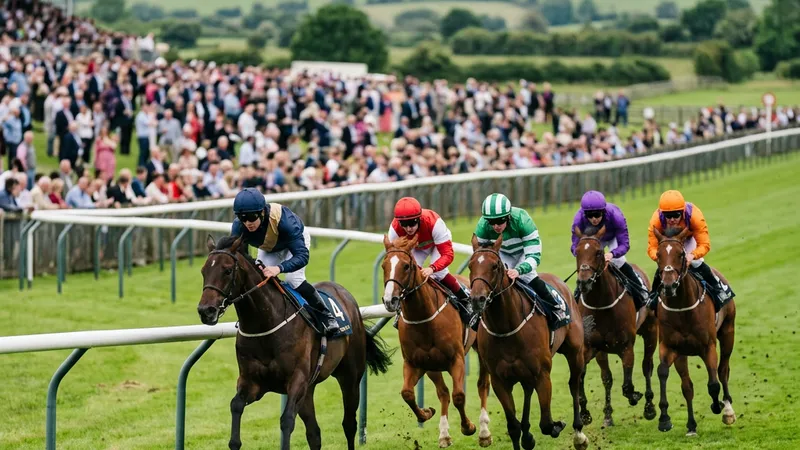
Racing is the one sport where an Irish punter starts with an edge. We grow up around it — the local point-to-point, a Sunday at the Curragh, the whole country stopping for the Gold Cup and the Irish Grand National. That familiarity is worth real money at the bookmaker, if you know how to use it. This is the complete guide to betting Irish racing: the bet types, the festivals, the each-way angles, and the books that treat racing punters properly.
Win, Each-Way, and Why the Place Terms Matter
A win bet is the simplest thing in racing: your horse first past the post, you collect. But most of the value in racing betting lives in the each-way bet, and most punters use it without fully reading the terms.
An each-way bet is two equal bets — one on the win, one on the place. The place part pays if your horse finishes in the frame, and exactly how many places pay, and at what fraction, follows a standard set of rules based on the size and type of race:
| Field size | Race type | Places paid | Each-way fraction |
|---|---|---|---|
| 5–7 runners | Any | 2 places | 1/4 |
| 8+ runners | Non-handicap | 3 places | 1/5 |
| 8–11 runners | Handicap | 3 places | 1/5 |
| 12–15 runners | Handicap | 3 places | 1/4 |
| 16+ runners | Handicap | 4 places | 1/4 |
Those are the default terms every Irish-licensed book works from. The festivals are where it gets interesting: on big-field handicaps at Cheltenham, Galway and the like, books compete by paying EXTRA places on top of the standard — five, six, sometimes seven — and often a bigger fraction. A 20/1 shot backed each-way that finishes fifth pays nothing on the default four-place terms but pays handsomely if your book offered five or six places.
That is where the homework pays. Before any big-field handicap, compare the place terms across your accounts — the difference between four places and six is the difference between a losing bet and a winning one, on exactly the same horse.
Best Odds Guaranteed — Take It Every Time
Best odds guaranteed is the most punter-friendly thing in racing betting, and it is close to universal among Irish-licensed books on raceday. The deal is simple: take an early price, and if the starting price is bigger when the race goes off, you get paid at the bigger one. You can never be worse off for taking a price early.
The practical lesson: once you have decided on a horse, take the price the morning of the race rather than waiting for the off. With BOG you keep the upside if it drifts and lock in the value if it shortens. Paddy Power, BoyleSports and bet365 all run BOG on Irish and UK racing as standard.
Ante-Post Betting — Bigger Prices, Bigger Risk
Ante-post betting means backing a horse days, weeks or even months before a race — typically for the big festival handicaps and championship races, where the prices are far longer than they will be on the day. Back a Cheltenham fancy in January and you might take 25/1 on a horse that goes off 8/1; that is the reward. The risk is that with a true ante-post bet, if your horse does not run — injured, balloted out, or saved for another target — you lose your stake. No race, no refund.
The way around it is "non-runner no bet" (NRNB), which most Irish-licensed books switch on for the major festivals a week or two out. Under NRNB your stake is returned if the horse is withdrawn, so you keep most of the ante-post value with none of the non-runner risk. The skill is timing: the genuinely big ante-post prices are there months ahead at your own risk, while NRNB gives you a safer cut of the value closer to the off. For most punters, waiting for NRNB to come in is the sensible play — you give up a little price for a lot of certainty.
The Irish Racing Calendar — Where the Value Lives
Irish racing runs all year, flat and jumps, and each meeting has its own character. Knowing the calendar is knowing when to pay attention.
| Festival | When | Code | Signature race |
|---|---|---|---|
| Cheltenham Festival | March | Jumps | The Gold Cup — the Irish raiders week |
| Fairyhouse | Easter Monday | Jumps | The Irish Grand National |
| Punchestown Festival | Late April | Jumps | The season finale, the Irish championships |
| The Curragh | Summer | Flat | The Irish Derby — flat HQ |
| Galway Festival | 27 Jul – 2 Aug | Mixed | The Galway Plate & Galway Hurdle |
| Leopardstown | Sept / Christmas | Mixed | Irish Champion Stakes; the Christmas Festival |
The two that bookend the betting year for most Irish punters are Cheltenham in March — where the Irish-trained horses now dominate and the ante-post markets build for months — and Galway at the end of July, seven days at Ballybrit that make up the biggest domestic betting week in the country. Both reward planning. Both get their own guide below.
The festivals are where it comes alive — Cheltenham in spring, Galway at the end of July — and our in-depth guides to each land through the season on our horse racing hub, alongside weekly previews.
The Irish Flat Season — Classics at the Curragh
The flat season runs from spring to autumn, and its heart is the Curragh in County Kildare, the home of Irish flat racing. The Irish Classics are run here: the Irish 2,000 and 1,000 Guineas in May, the Irish Derby — the showpiece of the whole flat calendar — in late June or early July, the Irish Oaks in July, and the Irish St Leger in September. Add the Irish Champion Stakes at Leopardstown in September and you have the handful of races that decide the season at the top level.
Flat racing rewards a different kind of homework than jumps. Ground still matters, but so does the draw — the stall a horse begins from can be worth lengths at certain tracks and trips — and the way a yard aims a horse at one specific Classic months in advance. The ante-post markets for the Irish Derby and the Guineas build all spring, and there is real each-way value to be found in a well-bred three-year-old before the market settles on it.
The Jumps Season — Leopardstown to Cheltenham
For many Irish punters the jumps are the main event, and the season builds through the winter to a spring climax. The Leopardstown Christmas Festival, four days from St Stephen's Day, is the first major marker, followed by the Dublin Racing Festival at the same track in early February — two days that have become the key Cheltenham trial in either country, where the leading Irish-trained novices and chasers show their hand.
From there the road leads to Cheltenham in March, where Irish-trained horses have dominated the recent renewals, then home to Fairyhouse for the Irish Grand National on Easter Monday and on to Punchestown in late April for the season finale and the Irish championships. Working out which horses are being aimed at which festival — and which are being quietly campaigned for a valuable handicap rather than a championship — is exactly where the Irish punter's local knowledge earns its keep.
Reading the Going — The Edge Most Punters Skip
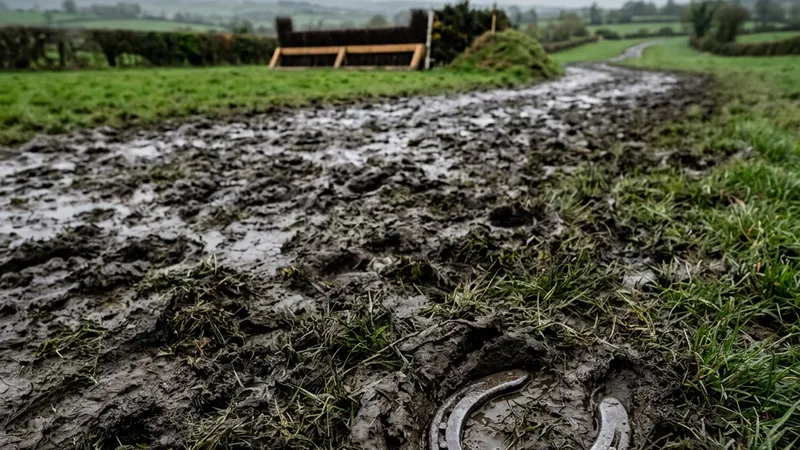
The going — the state of the ground — is the single most underused piece of form in racing, and on Irish jumps tracks in winter it is decisive. A horse with form figures that look ordinary on good ground can be transformed on heavy; another that looks unbeatable on the page has only ever won on a sound surface.
Before you back anything, check the official going and check the horse's record on that ground. The going changes through a day and after rain, so a horse whose price looked short in the morning can be value by the time the rain comes in over Punchestown. This is the part of racing where doing ten minutes of homework genuinely beats the market, and it is the first thing I look at on any card.
| Irish going description | What it means underfoot | The type it suits |
|---|---|---|
| Heavy | Saturated, deeply testing ground | Mud-loving stayers — stamina over speed |
| Soft | Plenty of give, slow ground | Horses with proven soft-ground form |
| Yielding | Between good and soft — an Irish term | Versatile types; a uniquely Irish description |
| Good | Sound, fair ground | The neutral standard most form reads off |
| Good to Firm | Quick, drying ground | Speedier, front-running types |
| Firm | Fast and hard, rare in Ireland | Specialists — many yards avoid it |
One word Irish racegoers use that you will not hear in Britain is "yielding" — the description for ground sitting between good and soft. It matters because a horse that acts on good to yielding can be a completely different proposition on plain soft or heavy. Irish winter jumps tracks ride deep, and after a wet week at Punchestown or Naas the ground can move from yielding to soft to heavy across a single afternoon. Always check the most recent going update rather than the one published the day before — and weight a horse's course-and-distance record on that exact ground above its headline form figures.
Exotic Bets — Forecasts, Tricasts and the Placepot
Beyond win and each-way, the exotics are where small stakes chase big returns.
A straight forecast asks you to name the first two home in the right order; a reverse forecast covers both orders. A tricast extends it to the first three. These pay big in competitive handicaps and are a fun way to back a strong opinion about how a race shapes up.
The Tote Placepot is the people's bet of any festival: pick a horse to place in each of the first six races, get all six right, and share the pool. It costs as little as a couple of euro, keeps you live through a whole card, and on a day when the favourites get turned over it can pay thousands. It is the bet to have running while you enjoy the racing.
Tote Betting and the Pools
Alongside the fixed-odds bookmakers, the Tote runs pool betting at every Irish meeting — and the pools are where small stakes can land outsized returns. Instead of a price fixed at the moment you bet, the Tote pays a dividend calculated from the whole pool after the race and split among the winning tickets. On a well-backed favourite the Tote can pay less than the bookmakers; on a longshot the crowd ignored, it can pay considerably more.
The pools worth knowing are the Win and Place pools, the Exacta (first two in the correct order) and Trifecta (first three), and the festival favourites — the Placepot, where you need a placed horse in each of the first six races, and its cheaper cousin the Quadpot over four. A couple of euro on a Placepot keeps you live across a whole card, and on a day the favourites come unstuck it can return hundreds for a single-figure stake. It is the bet to have running while you enjoy the racing.
Staking, Value and Keeping Records
However you bet, two habits separate the punters who last a season from the ones who do not. The first is staking to a plan — level stakes, or a fixed small percentage of your betting bank per bet, rather than piling on to chase a loss. Racing throws long losing runs at everyone; flat staking is what carries you through them without doing real damage.
The second is betting to value, not to favourites. A 5/2 shot that should be 6/4 is a bad bet even though it might win; an 8/1 chance that should be 5/1 is a good bet even though it will usually lose. Best odds guaranteed, extra places and the right pool at the right time are all just ways of squeezing more value out of the same horse. Keep a simple record of every bet — stake, price, result — and you will quickly see whether you are genuinely beating the market or just enjoying the racing. Both are perfectly fine, as long as you know which one you are doing.
The Best Irish-Licensed Books for Racing
Racing is the discipline where the Irish bookmakers earn their reputation, and where the right account genuinely matters.
Paddy Power is the Irish punter's default for racing — best odds guaranteed, generous extra-place concessions at the festivals, and an app built for raceday. BoyleSports, the other big Irish name, matches it for each-way terms and often shades it for value on Irish cards. Betfair is the one to hold for the Exchange: instead of taking the bookmaker's price you set your own, or lay a horse to lose — the sharpest racing punters live there. And bet365 leads for race streaming and in-running, letting you watch and bet live on meetings across Ireland and the UK.
My honest advice is the same as it is for any serious racing punter: hold two or three of these. The price difference on the same horse across books is real, and over a season of each-way bets and festival ante-post, taking the best price every time is the difference between a losing year and a winning one.
Betting Responsibly
Racing is a long season, and the festivals especially are designed to keep you betting from the first race to the last. Set a budget before the day starts and don't chase a bad result in the bumper because there's another card tomorrow.
Every bookmaker featured on Betting Wingmen is Irish-licensed and holds customer funds in a segregated account under the Gambling Regulation Act 2024. They all offer deposit limits, time-outs and self-exclusion — use them if you need them. If gambling stops being fun, GamblingCare.ie runs free, confidential support on 1800 936 725. 18+.
Frequently Asked Questions — Betting on Irish Horse Racing
What is each-way betting in horse racing?
An each-way bet is two bets in one: half your stake on the horse to win, half on it to place (finish in the top few, usually 2–4 depending on the field size). If it wins, both halves pay; if it only places, the place half pays at a fraction of the odds — commonly 1/5, or 1/4 at the big festivals. It is the standard way Irish punters back an outsider with a realistic chance of running into a place.
What does best odds guaranteed mean?
Best odds guaranteed (BOG) means that if you take an early price on a horse and the starting price (SP) turns out bigger, the bookmaker pays you at the bigger one. Take 6/1 in the morning, the horse drifts to 8/1 at the off and wins — you are paid at 8/1. It is a genuine value add on Irish and UK racing, offered by most Irish-licensed books on the day of the race.
Which is the best bookmaker for Irish racing?
It depends how you bet. Paddy Power and BoyleSports are the two Irish heavyweights for racing — strong each-way terms, best odds guaranteed, and extra places at the festivals. Betfair is the pick if you want the Exchange, where you set your own price or lay a horse to lose. bet365 leads for in-running and race streaming. Most serious racing punters hold two or three accounts to take the best price on each bet.
What is a placepot?
The Tote Placepot is a pool bet: you pick a horse to place in each of the first six races at a meeting. Get all six placed and you share the pool. Small stakes, potentially big returns, and it keeps you interested across a whole card — a festival favourite among Irish punters.
Is online horse racing betting legal in Ireland?
Yes. Betting on horse racing online is legal in Ireland with any bookmaker that holds a valid licence — issued by the Gambling Regulatory Authority of Ireland (GRAI) under the Gambling Regulation Act 2024; the GRAI replaced the Revenue Commissioners as the licensing authority on 5 February 2026 and its remote betting licences commenced on 1 July 2026. You must be 18 or over. Every book reviewed on Betting Wingmen is Irish-licensed.
See our complete horse racing betting guide for Ireland — including exotic bets explained, venue guides, and our top rated licensed bookmakers.
See our top-rated Irish racing bookmakers →18+ only. Please gamble responsibly.
Free help available: gamblingcare.ie | Helpline: 1800 936 725
Related Posts